|
The information
presented here was extracted from URL
http://www.lungusa.org/air/air00_flood.html which was presented by the Nation Lung
Association.
FLOOD CLEAN UP
WHY IS FLOODING AN INDOOR AIR QUALITY PROBLEM?
Flood waters and the dirt they carry may pose special problems for the thousands of people with existing lung disease. Standing water remaining from any flood is a breeding ground for microorganisms, which can become airborne and be inhaled, putting people at risk for lung disease. Even when the flooding is due to a fairly clean source, such as rain water, the growth of these microorganisms can cause allergic reactions in sensitive individuals.
The greatest health risk for the general public may come from water-borne bacteria; however, the dirt and mold left behind after the water recedes is of special concern to those with preexisting lung disease.
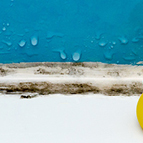
Damp houses and furnishings promote mold growth, which can aggravate asthma and allergies. After a flood, dust residue and sediment can be inhaled during clean up efforts, which also add to lung disease complications.
The physical stress of dealing with the flood
may also put a strain on people who are already ill or the elderly,
providing an opportunity for respiratory infections and other sicknesses
to arise.
WHAT IS THE SOLUTION?
Drying everything in a home after a flood is imperative. Excess moisture in the home poses an indoor air quality concern for the following reasons:
Areas with this high level humidity and moist materials provide an ideal environment for the growth of microorganisms, which could result in additional health hazards such as allergic reactions.
Coming into contact with air or water that contains these microorganisms can make a person sick.
Long-term high levels of humidity can foster
growth of dust mites, which are a major trigger of allergic reactions
and asthma.
Although the drying process can take a long time,
homeowners should be patient because it is necessary to keep a home air
quality healthy. Some household items may take longer than others to dry,
such as upholstered furniture and carpets. To avoid growth of
microorganisms, however, household items should be dried completely before
they are brought back into the house.
During and after the drying process
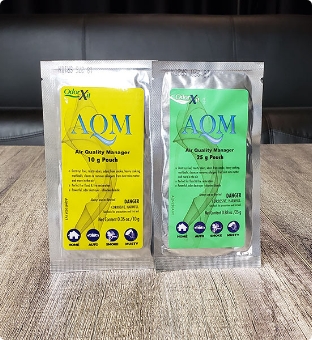
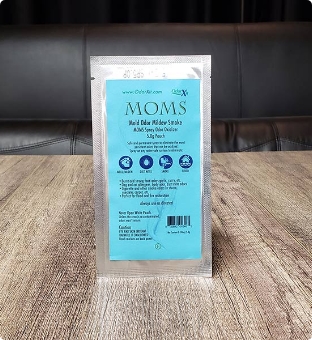
OdorXit AQM-ClO2
can be used to kill any
microorganisms that are present provided the air flow in and out of
the area being treated is restricted during treatment. OdorXit AQM (Air Quality Manager) ClO2
packets produce a vapor that will oxidize and kill mold fungus, mold
spores, bacteria and a wide range of other organic source odors. If
the Fast Release version of the product is used, the area should not
be inhabited by humans or domesticated pets for 24 hours. The Slow
Release version takes longer to get kill the microorganisms but the
levels of ClO2 are far below the levels that will harm pets or humans-therefore they can stay in the area for long periods of time.
OdorXit Products Make Life Smell Fresh! . |